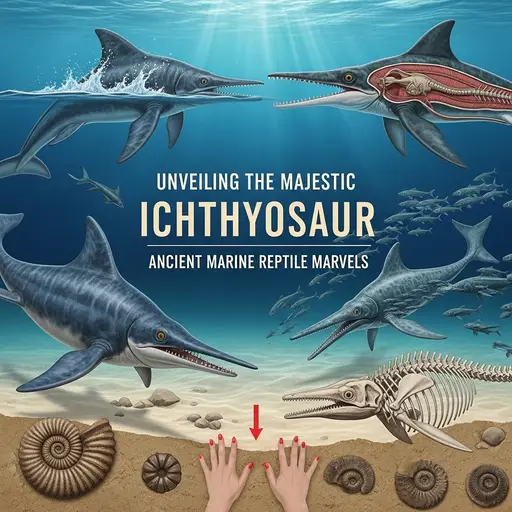
1. Dolphin-Like Streamlining
1. Dolphin-Like Streamlining: Ichthyosaurs evolved a remarkably streamlined, torpedo-shaped body, a classic example of convergent evolution in aquatic predators. This body plan minimized drag, allowing for efficient, high-speed swimming through ancient seas. Their powerful caudal fin provided thrust, enabling them to chase down prey in the vast oceans of the Mesozoic Era. This adaptation mirrors that of modern dolphins and sharks, showcasing a shared evolutionary solution to aquatic locomotion.
2. Viviparous Reproduction
2. Viviparous Reproduction: Unlike their terrestrial reptilian ancestors and many modern marine reptiles, most Ichthyosaurs were viviparous, meaning they gave birth to live young. Fossil discoveries have revealed females with developing embryos inside their body cavities, providing definitive proof of this reproductive strategy. This trait offered a significant evolutionary advantage, sparing the vulnerable young from predation in the open ocean and ensuring a higher survival rate, much like modern cetaceans.
3. Diverse Tooth Morphology
3. Diverse Tooth Morphology: Ichthyosaur dentition varied greatly depending on diet, showcasing a remarkable range of adaptations. Some possessed sharp, conical teeth for grasping fish and squid, while others had blunt teeth or even toothless jaws adapted for crushing shelled invertebrates. This dietary specialization highlights the ecological niches they occupied and the competitive pressures within ancient marine ecosystems, offering valuable insights into food web dynamics.
4. Exceptional Vision
4. Exceptional Vision: Many Ichthyosaurs possessed remarkably large eye sockets, often housing enormous scleral rings made of bone. These structures suggest they had excellent vision, possibly adapted for hunting in low-light conditions or at great depths. This keen eyesight was crucial for locating prey and navigating the vast, often murky, prehistoric marine environments, a characteristic shared with many active marine predators today.
5. Early Mammalian-Like Brains
5. Early Mammalian-Like Brains: Endocranial casts of Ichthyosaur skulls reveal braincases with proportions and features that bear resemblance to those of modern mammals, particularly regarding the development of the cerebrum. This suggests a degree of complex cognitive abilities and potentially sophisticated sensory processing, differentiating them from the more primitive brain structures seen in some other marine reptiles, hinting at advanced behaviors.
6. Enormous Size Range
6. Enormous Size Range: Ichthyosaurs spanned an impressive size spectrum, from small, meter-long species to giants exceeding 15 meters in length. The discovery of Shonisaurus sikanniensis, a colossal Triassic Ichthyosaur, demonstrates their capacity for immense growth. This wide range in size allowed them to exploit various ecological roles, from small fish-eaters to apex predators capable of tackling large prey in their ancient ocean habitats.
7. Late-Stage Extinction
7. Late-Stage Extinction: While most Ichthyosaur lineages died out by the end of the Cretaceous period, some smaller species persisted into the early Paleogene. These late-surviving forms demonstrate the remarkable resilience and adaptability of the group over an exceptionally long evolutionary history, spanning multiple mass extinction events. Their eventual disappearance marked the end of an era for these iconic marine reptiles.