1. World's Oldest Temple?
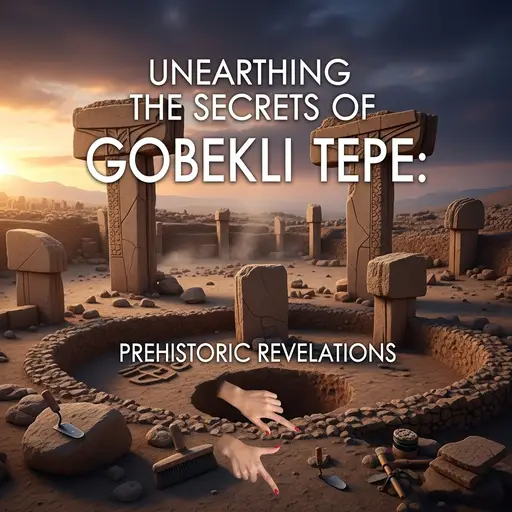
Göbekli Tepe is widely considered the world's oldest known temple, dating back to the Pre-Pottery Neolithic A period, around 9600-8200 BCE. This staggering age predates settled agriculture and pottery, making its sophisticated monumental architecture an anomaly in the historical record. Its discovery has rewritten timelines of human development, suggesting complex societal organization and ritualistic practice emerged much earlier than previously believed. Examining the stratigraphic layers provides definitive evidence for its immense antiquity, pushing back the origins of monumental building and potentially organized religion by millennia.
2. Massive T-Shaped Pillars
The site features numerous massive, T-shaped limestone pillars, some weighing up to 20 tons and standing over 18 feet tall. These anthropomorphic monoliths, carved with intricate animal reliefs and abstract symbols, were evidently transported and erected by human hands without the aid of wheels or domesticated draft animals. The sheer effort involved in quarrying, shaping, and installing these colossal stones highlights the remarkable ingenuity and collaborative capabilities of the Neolithic people who built Göbekli Tepe. Understanding the construction methods for these megaliths prompts awe and speculation about their advanced organizational skills.
3. Enigmatic Animal Reliefs
The pillars are adorned with striking relief carvings of wild animals, including lions, boars, gazelles, foxes, cranes, and snakes. These depictions are not mere decoration; they likely hold deep symbolic or mythological significance, possibly representing deities, spirits, or cosmological beliefs. The choice and placement of these animals offer clues into the spiritual world and environmental context of the builders, with some scholars suggesting they represent a cosmology that guided their worldview and rituals. The artistic skill displayed in these carvings is exceptional for its era.
4. No Evidence of Habitation
Despite its monumental scale, excavations at Göbekli Tepe have revealed no clear evidence of permanent human habitation, such as domestic structures or middens. This suggests the site served a specialized purpose, likely as a ritual or ceremonial center for nomadic or semi-nomadic groups who gathered periodically. The absence of continuous settlement challenges the traditional narrative that monumental architecture arose only after the development of agriculture and sedentary lifestyles. This points to hunter-gatherers possessing the capacity for large-scale communal projects.
5. Intentional Burial of Structures
Remarkably, the builders of Göbekli Tepe intentionally buried the structures in newer layers of earth, effectively preserving them for millennia. This deliberate act of infill suggests a desire to preserve or perhaps to decommission the site, indicating a conscious tradition of remembrance and a different approach to the meaning of place over time. Archivists and archaeologists marvel at this act of archaeological preservation, which provides an unparalleled window into the past. Understanding this process offers insights into the cultural practices of the site's creators.
6. Hub of Early Ritual and Religion
Scholars widely believe Göbekli Tepe was a central gathering place for rituals and religious ceremonies, potentially playing a crucial role in the early development of organized religion and social cohesion. The sheer scale and labor investment point to a shared belief system that motivated the community to undertake such a massive project. Its discovery supports the 'temple before temple' hypothesis, suggesting that religious or ritualistic impulses may have preceded and even motivated the development of agriculture. The site serves as a testament to the human need for spiritual connection and community gathering.
7. Precedes Agricultural Revolution
The establishment of Göbekli Tepe predates the widespread adoption of agriculture and the domestication of animals by several thousand years. This challenges the long-held assumption that agriculture was a prerequisite for large-scale societal organization and monumental construction. The existence of such a complex site among hunter-gatherer populations suggests that sophisticated social structures, belief systems, and communal efforts could be fostered outside the context of farming. This forces a re-evaluation of Neolithisation and early cultural evolution processes. The site serves as a critical piece of evidence for the complex relationship between hunting, gathering, and societal development.