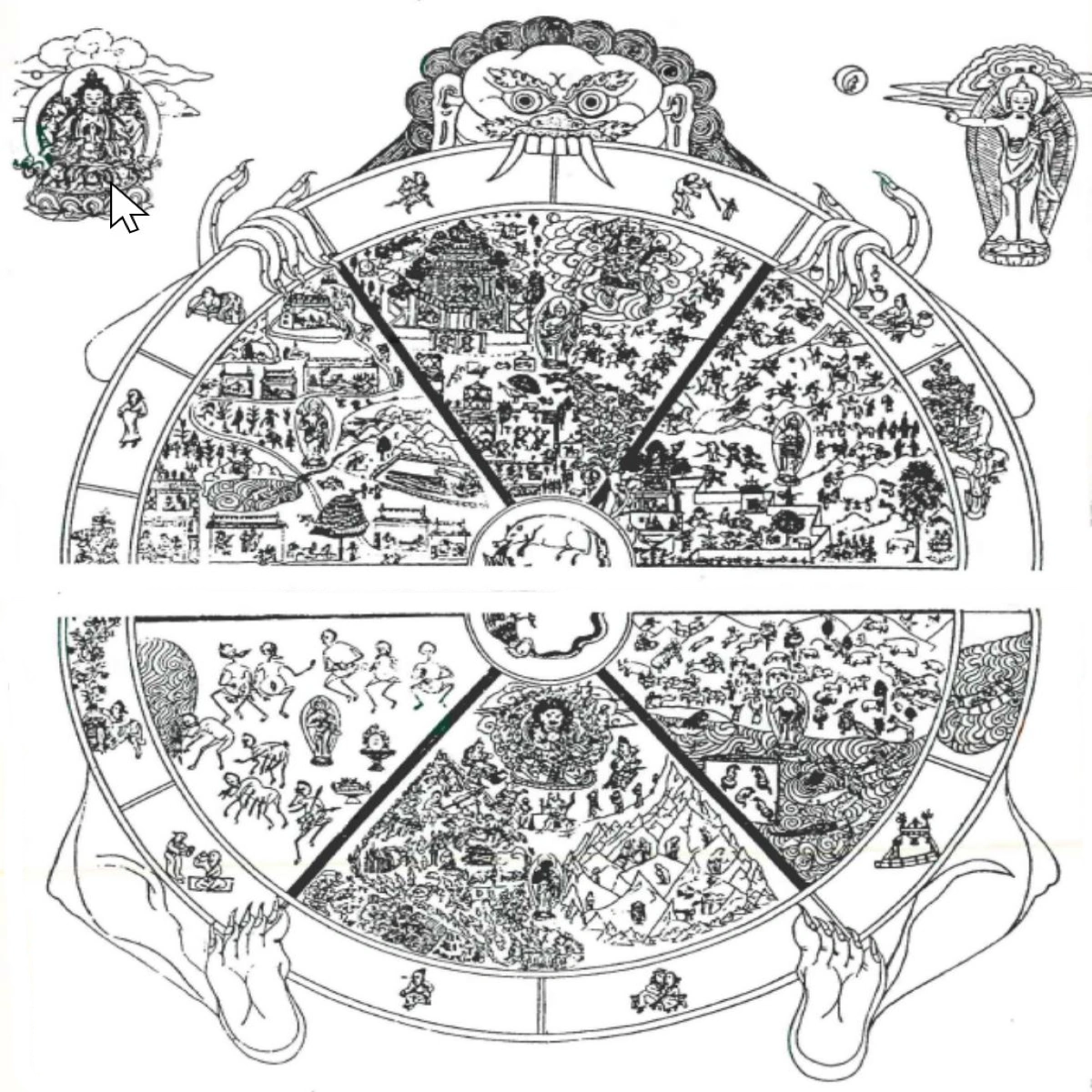
01. Ignorance. (Avijjā or avidyā, Tibetan ma rigpa)
Ignorance is the ultimate manner by which the self and phenomena exist. Ignorance is a condition for mental formation.
02. Mental formations/volitions. (Saṅkhāra, or saṁskāra, Tibetan duje)
Mental formation is a condition for consciousness.
03. Status consciousness. (Viññāṇa or vijñāna, Tibetan nampar shepa)
Consciousness is a condition for name and form.
04. Name and Form . (Nāmarūpa or nāma-rūpa, Tibetan ming dang zuk)
Name and form is a condition for the six senses.
In Buddhism name and form refers to the constituents of a living being: nāma typically refers to the mental component of the person, while rūpa refers to the physical, and removal of them leads to the realization of the ultimate reality of ‘Shunyatha’ or ‘Emptiness’.
The five skandha (link below) i.e. mind-and-matter, are another reference for name and form.
05. The six senses. (Saḷāyatana or ṣaḍāyatana, Tibetan kyemche druk)
The six senses are the conditions for contact.
06. Contact. (Phassa or sparśa, Tibetan rekpa)
Contact arises from the six senses. Contact is the psychological process created by the six senses, the objects and the consciousness. Without contact, we will have no feeling. Contact is therefore a condition for feeling. From this link we begin suffering.
07. Feelings. (Vedanā, Tibetan tsorwa)
Feeling is a condition for craving.
08. Cravings/longings/desires. (Taṇhā or tṛṣṇā, Tibetan sepa)
Craving is a condition for clinging.
09. Clinging to or graping. (Upādāna, Tibetan lenpa)
Clinging is a condition for becoming as we are so attached to all phenomena, including matter and self, we therefore assume that there is an existence.
10. Generation of factors for rebirth. (Bhava, Tibetan sipa)
Becoming is a condition for birth.
11. Birth or rebirth. (Jāti, Tibetan kyewa)
Birth is a condition for old age and death.
12. All the sufferings or old age and death.(Jarāmaraṇa, Tibetan ga shi)
Old age and death is a condition for ignorance.