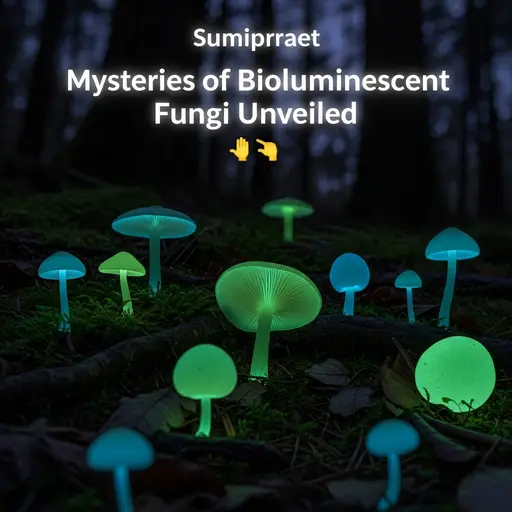
1. The Faint Emerald Flicker
The faint emerald flicker is a hallmark of many bioluminescent fungi, a soft, eerie light that emerges from the mycelial network. This captivating glow is produced through a complex biochemical reaction involving luciferin and luciferase, creating a sustainable and often persistent light source. Understanding the 'why' behind this ethereal illumination is key to appreciating its ecological significance.
2. 'Foxfire' Phenomenon Explained
'Foxfire' is the common name for the phosphorescent glow emitted by certain fungi, particularly those growing on decaying wood. Historically attributed to spirits or mythical creatures, modern science reveals it's a biological process, crucial for spore dispersal. This luminous display attracts nocturnal insects, inadvertently aiding in the fungi's reproductive cycle.
3. Mycena Chlorophos: The Star of the Show
Mycena chlorophos, a star among glowing fungi, exhibits a brilliant green luminescence. Native to subtropical and tropical regions, its delicate, umbrella-shaped caps and stems pulse with light, creating breathtaking displays in damp, dark environments. Its specific light-emitting compounds are a subject of ongoing biochemical research.
4. Panellus Stipticus: The Bitter Glow
Panellus stipticus, often found on decaying hardwood, is another fascinating bioluminescent species. While some strains exhibit a notable glow, others do not, highlighting genetic variations in light production. Its medicinal properties and the presence of specific enzymes are also areas of scientific interest, alongside its captivating luminescence.
5. Omphalotus Olearius: The Jack-o'-Lantern Fungus
The Jack-o'-Lantern fungus, Omphalotus olearius, is notorious for its bright orange fruiting bodies and its toxic nature, despite its alluring glow. Its bioluminescence, while less intense than some other species, can still be observed in large clusters, particularly on decaying oak wood. Misidentification can be dangerous, making awareness of its appearance crucial.
6. Armillaria Mellea: The Honey Mushroom's Light
While commonly known for its edible fruiting bodies and parasitic nature, certain strains of Armillaria mellea, the honey mushroom, also exhibit bioluminescence in their mycelium. This subterranean glow contributes to the overall fungal lightscape, often going unnoticed by casual observers due to its hidden location.