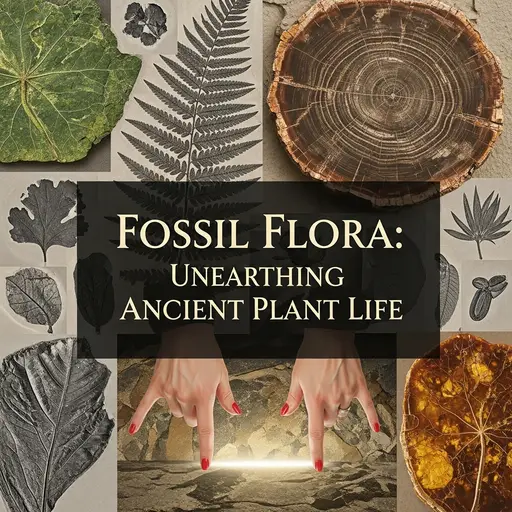
1. Lycopodiophyta: The Prehistoric Clubmosses
Lycopodiophyta: Explore the ancient clubmosses, some of the earliest vascular plants on Earth. Fossilized remains, such as those of Lepidodendron, showcase towering tree-like forms that dominated Carboniferous forests. These early plants played a significant role in forming coal deposits, offering vital insights into prehistoric ecosystems and atmospheric conditions. Their distinctive leaf scars and sporangia provide key identification features for paleontologists. Understanding their morphology and reproductive strategies helps reconstruct ancient terrestrial environments and the evolution of plant life, impacting our knowledge of early land colonization and the development of complex plant structures.
2. Medullosa: Seed Ferns of the Carboniferous
Medullosa: Journey to the Carboniferous Period to examine the enigmatic seed ferns. These plants possessed a unique combination of fern-like fronds and seed-bearing structures, blurring the lines between primitive and more advanced flora. Fossil evidence reveals their complex branching patterns and internal anatomy. Medullosa's ecological niche and reproductive adaptations highlight significant evolutionary steps in the development of seed plants, offering crucial data for tracing the lineage of modern seed-bearing trees. Their presence in ancient fossil beds provides clues about the climate and environmental pressures of the time.
3. Williamsonia: Bennettitales of the Mesozoic
Williamsonia: Discover the Bennettitales, an extinct group of seed plants flourishing during the Mesozoic Era, often referred to as the 'age of cycads.' Williamsonia, a representative genus, exhibited palm-like or tree-like growth with large, flower-like reproductive structures. Fossil specimens, particularly fossilized cones and stems, offer evidence of their diverse habitats and the ecological landscape of the dinosaur era. Studying Williamsonia helps clarify the evolutionary relationships between ancient gymnosperms and angiosperms, shedding light on the origins of flowering plants and the diversification of plant life during a pivotal period in Earth's history.
4. Archaeopteris: The Landmark Devonian Tree
Archaeopteris: Uncover the significance of Archaeopteris, a remarkable Devonian plant often considered one of the earliest true trees. This extinct organism possessed wood similar to modern conifers and produced foliage resembling ferns. Its pioneering development of woody tissue and complex vascular systems was crucial for the upright growth and large-scale forest formation seen in later geological periods. Fossilized impressions of its wood, leaves, and reproductive organs provide invaluable evidence for the evolution of arboreal life and the fundamental changes in terrestrial ecosystems that paved the way for modern forests. Its discovery revolutionized our understanding of early forest development.
5. Glossopteris: The Permian Gondwanan Leaf
Glossopteris: Explore the iconic Glossopteris flora, a dominant plant group in the Southern Hemisphere during the Permian Period. The characteristic tongue-shaped leaves of Glossopteris are found in fossil deposits across continents that once formed the supercontinent Gondwana. The widespread distribution of Glossopteris fossils was a key piece of evidence used by Alfred Wegener to support his theory of continental drift. Studying the morphology and paleoecology of Glossopteris provides insights into the climate and biogeography of ancient supercontinents, connecting geological history with biological distribution and evolution.