1. Bee Waggle Dance
The Waggle Dance
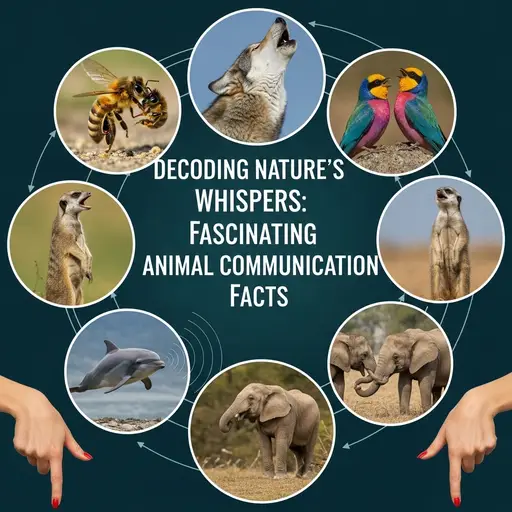
A marvel of insect communication, the waggle dance is a precise form of symbolic language used by honeybees to inform their hive mates about the direction and distance to a food source. The angle of the waggle run relative to gravity indicates the direction of the food source relative to the sun, while the duration of the waggle indicates the distance. This dance is performed on the vertical surface of the honeycomb within the dark confines of the hive, a testament to the bees' innate navigational and communicative abilities. Discovering the intricacies of this behavior highlights the sophisticated social organization and cognitive capabilities of honeybees.
2. Dolphin Whistles and Clicks
Dolphin Signature Whistles
Dolphins possess unique 'signature whistles' that function much like human names, allowing individuals to identify and address each other. These whistles are learned and can be mimicked by other dolphins, facilitating recognition and social bonding within their complex societies. Beyond signature whistles, dolphins also utilize a broad repertoire of clicks for echolocation, enabling them to navigate, hunt, and perceive their surroundings in the murky depths. Exploring these vocalizations reveals the advanced auditory processing and social intelligence of these marine mammals.
3. Elephant Rumbles and Infrasound
Elephant Infrasonic Communication
Elephants communicate over vast distances using low-frequency vocalizations known as infrasound, which fall below the range of human hearing. These deep rumbles can travel for miles through the ground and air, allowing elephants to maintain contact with distant herd members, coordinate movements, and warn of danger. The ability to produce and perceive these sounds underscores the sophisticated sensory systems and long-range communication strategies employed by these intelligent giants, providing insights into their social structure and environmental awareness.
4. Canine Scent Marking
Canine Olfactory Signals
Dogs, wolves, and other canids extensively use scent marking as a primary mode of communication. By depositing urine, feces, or specialized scent gland secretions in strategic locations, they convey information about their presence, identity, territorial boundaries, reproductive status, and emotional state. This 'olfactory landscape' acts as a continuous biological bulletin board, allowing individuals to communicate without direct interaction. Understanding these scent signals offers a deeper appreciation for the sophisticated chemical communication networks in the canine world.
5. Bird Song Complexity
Avian Vocalizations and Mimicry
Birdsong is a complex form of communication used for territory defense, mate attraction, and social bonding. Many species exhibit intricate and learned vocalizations, with some, like the lyrebird and mockingbird, demonstrating remarkable mimicry skills, incorporating sounds from their environment into their repertoire. The structure and variation in birdsong can convey a wealth of information, including the singer's species, sex, age, health, and even individual identity. This fascinating aspect of ornithology highlights the cognitive abilities and acoustic diversity within avian species.
6. Primate Facial Expressions and Gestures
Primate Non-Verbal Communication
Primates, particularly great apes like chimpanzees and gorillas, utilize a rich array of facial expressions, body postures, and manual gestures to communicate. These visual signals convey emotions, intentions, social dominance, affiliation, and specific desires. From a 'play face' to a 'fear grimace,' these nuanced expressions are crucial for navigating complex social hierarchies and reinforcing group cohesion. The study of primate communication offers profound insights into the evolution of social intelligence and non-verbal cues.
7. Firefly Bioluminescent Signals
Firefly Flash Patterns
Fireflies communicate using species-specific patterns of bioluminescent flashes. These light signals serve primarily for mate attraction, with males flashing to advertise their presence and females responding with a specific delayed flash to indicate receptivity. Variations in flash duration, frequency, and color play a critical role in species recognition and courtship rituals. The intricate light displays of fireflies are a mesmerizing example of visual communication in the insect world, demonstrating adaptive signaling for reproductive success.